
A warm climate, beautiful coastlines, and abundant sunshine make spending time outdoors especially enjoyable. However, the summer season also brings an increased likelihood of encounters with jellyfish, stinging insects, and snakes. In most cases, these incidents do not pose a serious threat to life, provided that the affected person knows how to respond immediately after a sting or bite. More often than not, complications arise from common first-aid mistakes, the use of ineffective home remedies, or delays in seeking medical attention.
Modern medical research shows that appropriate first aid administered during the first few minutes after a sting or bite can significantly reduce inflammation, lower the risk of allergic complications, and promote faster tissue recovery. For this reason, it is important for everyone to understand which symptoms represent a normal reaction and which require immediate medical evaluation.
Why the Body Reacts Differently to Bites and Stings
The body's response depends not only on the type of animal or insect involved but also on the individual's immune system. During a bite or sting, biologically active substances, toxins, or venom proteins enter the tissues, triggering an inflammatory response.
For most people, this results in redness, pain, itching, and mild swelling. However, individuals with heightened sensitivity may experience a much stronger immune response, potentially leading to a severe allergic reaction.
According to medical studies, the most dangerous complication is anaphylaxis—a rapidly developing condition characterized by difficulty breathing, a sudden drop in blood pressure, and loss of consciousness. Although relatively uncommon, anaphylaxis is a life-threatening medical emergency that requires immediate treatment.
What to Do After a Jellyfish Sting
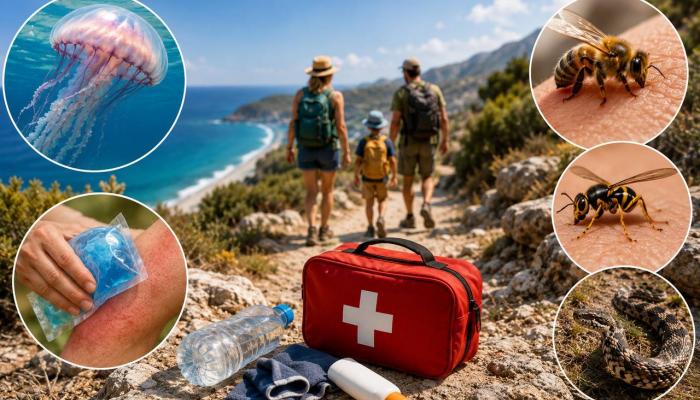
The Mediterranean Sea is home to several jellyfish species that periodically appear along the coast of Cyprus, particularly during the warmer months. Their tentacles are covered with millions of microscopic stinging cells (nematocysts) containing venom. Upon contact with the skin, these cells instantly release toxins, causing intense burning pain, redness, and inflammation.
A unique feature of jellyfish stings is that detached tentacles remain capable of releasing venom. For this reason, experts strongly advise against touching them with bare hands or attempting to wipe them away with a towel, as doing so may trigger additional venom release and worsen the injury.
After leaving the water, the affected area should be gently rinsed only with seawater. Fresh water alters the osmotic pressure inside the stinging cells and may trigger additional toxin discharge. Remaining tentacles should be carefully removed using tweezers or a rigid object with a straight edge. A cold compress should then be applied to reduce inflammation and relieve pain.
Traditional remedies such as vinegar, alcohol, urine, or baking soda are no longer considered universally appropriate treatments. Current research demonstrates that their effectiveness depends on the specific jellyfish species involved, and in some cases these methods may actually worsen tissue damage. International guidelines therefore emphasize cooling the affected area and carefully removing any remaining tentacles.
If severe weakness, dizziness, difficulty breathing, rapidly progressing swelling, or heart rhythm disturbances develop after a jellyfish sting, immediate medical attention is essential.
Understanding Insect Bites and Stings
Most people have experienced mosquito bites or bee and wasp stings and therefore consider them minor inconveniences. However, research shows that stings from hymenopteran insects—including bees and wasps—remain among the leading causes of severe allergic reactions worldwide.
When a honeybee stings, the stinger continues releasing venom for a short period after the sting. Therefore, it should be removed as quickly as possible. Experts recommend avoiding squeezing the venom sac with fingers, as this may inject additional venom into the skin. After removing the stinger, the area should be washed with water, disinfected, and cooled with a cold compress to reduce pain and swelling.
Unlike bees, wasps do not leave their stinger behind and may sting multiple times. Most reactions are limited to localized redness, mild pain, and swelling that gradually resolve within several days.
Mosquito bites rarely cause serious complications, but intense itching often leads to scratching, which damages the skin barrier and increases the risk of bacterial infection. Physicians therefore recommend avoiding scratching and using cooling or anti-itch products if symptoms become bothersome.
Ticks deserve particular attention because the greatest risk comes not from the bite itself but from the potential transmission of infectious diseases. Even when the bite is painless, the skin should be carefully examined after walking through forests, tall grass, or shrubs. The sooner a tick is removed, the lower the likelihood of transmitting certain pathogens.
Snakebites Require Calm and Appropriate Action
Several snake species inhabit Cyprus, but the primary medically significant species is the blunt-nosed viper (Macrovipera lebetina). Fortunately, snakebites remain relatively uncommon because snakes generally avoid human contact and usually bite only when they feel threatened.
Viper venom may cause severe tissue inflammation, rapidly progressing swelling, impaired blood clotting, and damage to blood vessels. In severe cases, systemic poisoning may affect internal organs. Therefore, any suspected venomous snakebite requires immediate medical assessment.
Following a snakebite, remaining calm is extremely important, as an elevated heart rate accelerates the spread of venom throughout the body. The affected limb should be immobilized and kept as still as possible until professional medical assistance becomes available.
Despite the widespread circulation of misleading advice online, current clinical guidelines strongly discourage cutting the wound, attempting to suck out the venom, applying a tourniquet, or cauterizing the bite site. None of these methods removes venom effectively, while all significantly increase the risk of infection, tissue damage, vascular injury, and other serious complications.
When Medical Attention Is Urgently Needed
Although most bites and stings resolve without significant complications, certain symptoms always require immediate medical evaluation regardless of the cause.
Warning signs include:
- difficulty breathing;
- shortness of breath;
- swelling of the face, lips, or tongue;
- rapidly spreading skin redness;
- fainting or loss of consciousness;
- severe weakness;
- irregular heartbeat.
These symptoms may indicate anaphylaxis, a potentially life-threatening allergic reaction that requires emergency treatment.
Medical attention is also necessary if signs of wound infection develop several days later, including increasing redness, pus, fever, or worsening pain.
Reducing the Risk During Outdoor Activities
Prevention remains the most effective form of protection.
When visiting the beach, pay attention to lifeguard warnings regarding jellyfish and avoid entering the water if large numbers are present. In areas where jellyfish are common, protective swim shirts or full-body rash guards provide additional protection during prolonged swimming.
When hiking or walking along nature trails, wear closed shoes and clothing that protects the legs from accidental contact with snakes and insects. Modern insect repellents significantly reduce the likelihood of mosquito and tick bites, and exposed skin should always be checked carefully after returning from outdoor activities.
Avoid handling unfamiliar animals, turning over rocks unnecessarily, or approaching wild snakes—even if they appear motionless. In most cases, simply following basic safety precautions is enough to prevent dangerous encounters.
Key Takeaways
Modern medicine provides strong scientific evidence that prompt and appropriate first aid significantly reduces the risk of complications following jellyfish stings, insect bites, and snakebites.
It is equally important to remember that many traditional home remedies passed down through generations are now recognized as not only ineffective but potentially harmful.
Understanding basic safety measures at the beach and in nature, paying close attention to your symptoms, and seeking timely medical care when necessary are the best ways to protect your health and enjoy outdoor activities safely—even in regions where encounters with jellyfish, insects, and snakes are a natural part of the environment.