


Primary tabs
Languages Spoken


We would like to inform you that a Patient’s Rights Officer is available at our diagnostic center. The Officer is responsible for providing you assistance and support, as well as offering advice and guidance on matters concerning patients’ rights. Furthermore, you may submit any complaints using the relevant forms available at the reception.
Patients ‘Rights Officer: Kristina Popova Contact number: 26821444
Deputy (in case of absence): Dr. Ourania Demetriadou Contact number: 26821444
Additional Information
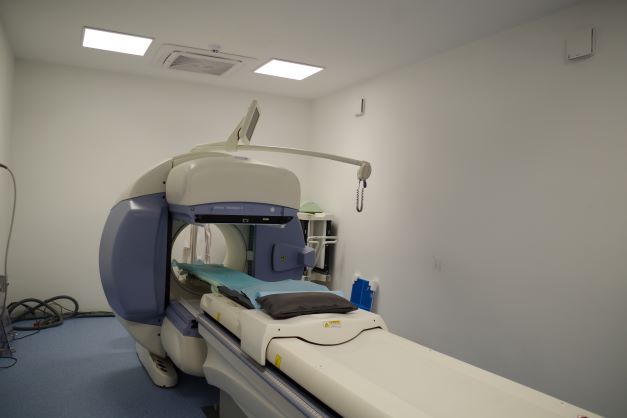
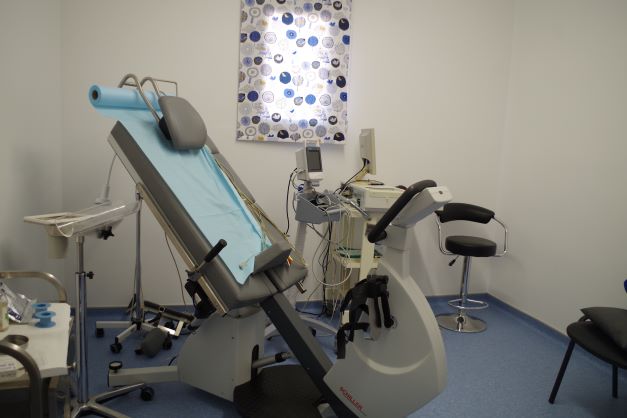
In DEMANDSCAN Nuclear diagnostic center the following tests are provided, among others, always by appointment and after the necessary preparation of the patient, when required.
- Cardiac Scintigraphy:
Myocardial perfusion scan (MPI) to look at blood flow within the heart muscle. It helps to assess for conditions like coronary artery disease and determine the extent of damage after a heart attack.
MUGA scan to investigate the pumping efficiency of the heart and
Amyloid scan to detect and assess cardiac amyloidosis, a condition where abnormal protein deposits build up in the heart.
- Bone Scintigraphy:
A bone scan is the most sensitive method for demonstrating disease in bone, often providing an early diagnosis or demonstrating pathology not seen on an X-ray film.
Whole Body Bone scan, which is performed mainly to detect bone metastases or primary bone tumors and
Three phase Bone scan to investigate orthopedic diseases, joint prosthesis and bone pain of unknown etiology.
- Thyroid and Parathyroid Gland Scintigraphy:
Thyroid Scan with Technetium pertechnetate, to assess the function of the thyroid gland and to determine the existence of nodules and their functionality.
Iodine 131 Whole body Scan, to identify remaining thyroid tissue in patients who have undergone total thyroidectomy for thyroid cancer, diagnose more accurately their condition and help in better planning of the treatment and follow up.
Parathyroid subtraction scan with Tc99m Myoview, is used to locate abnormal parathyroid glands, usually in the context of primary hyperparathyroidism, which is characterized by elevated calcium and parathyroid hormone levels.
- Urinary Tract Scintigraphy:
Static Kidney Scintigraphy (DMSA scan) is performed to confirm/exclude acute pyelonephritis and identify renal parenchymal lesions and scars, as well as to calculate the percentage contribution of each kidney to overall renal function.
Dynamic Kidney Scintigraphy (DTPA renogram) is performed to check the blood supply to the kidneys, assess their function (GFR-glomerular filtration rate), rule out urinary tract obstruction an to calculate the percentage contribution of each kidney to overall renal function.
Radioisotopic cystogram assesses the urinary bladder's function and identifies potential issues like vesicoureteral reflux (VUR).
- Lymphatic System scintigraphy:
Sentinel Lymph Node localisation helps to locate the sentinel lymph node, so that it can be surgically removed. It is usually performed in patients with breast cancer or skin melanoma.
Radioisotopic Lymphangiography is performed to assess the integrity of the lymphatic system in the upper and lower extremities. It helps in diagnosing and assessing lymphatic disorders like lymphedema.
- Lung Scintigraphy (V/Q Scan) :
Lung Perfusion Scan evaluates blood flow within the lungs. It helps to assess if there is adequate blood circulation to all areas of the lungs, which is crucial for proper oxygen exchange. Usually it is used to exclude/confirm pulmonary embolism.
Lung Ventilation Scan assesses how well air moves in and out of the lungs. It is often performed in conjunction with a perfusion scan (which assesses blood flow) as part of a V/Q scan, primarily to diagnose or rule out pulmonary embolism (blood clots in the lung).
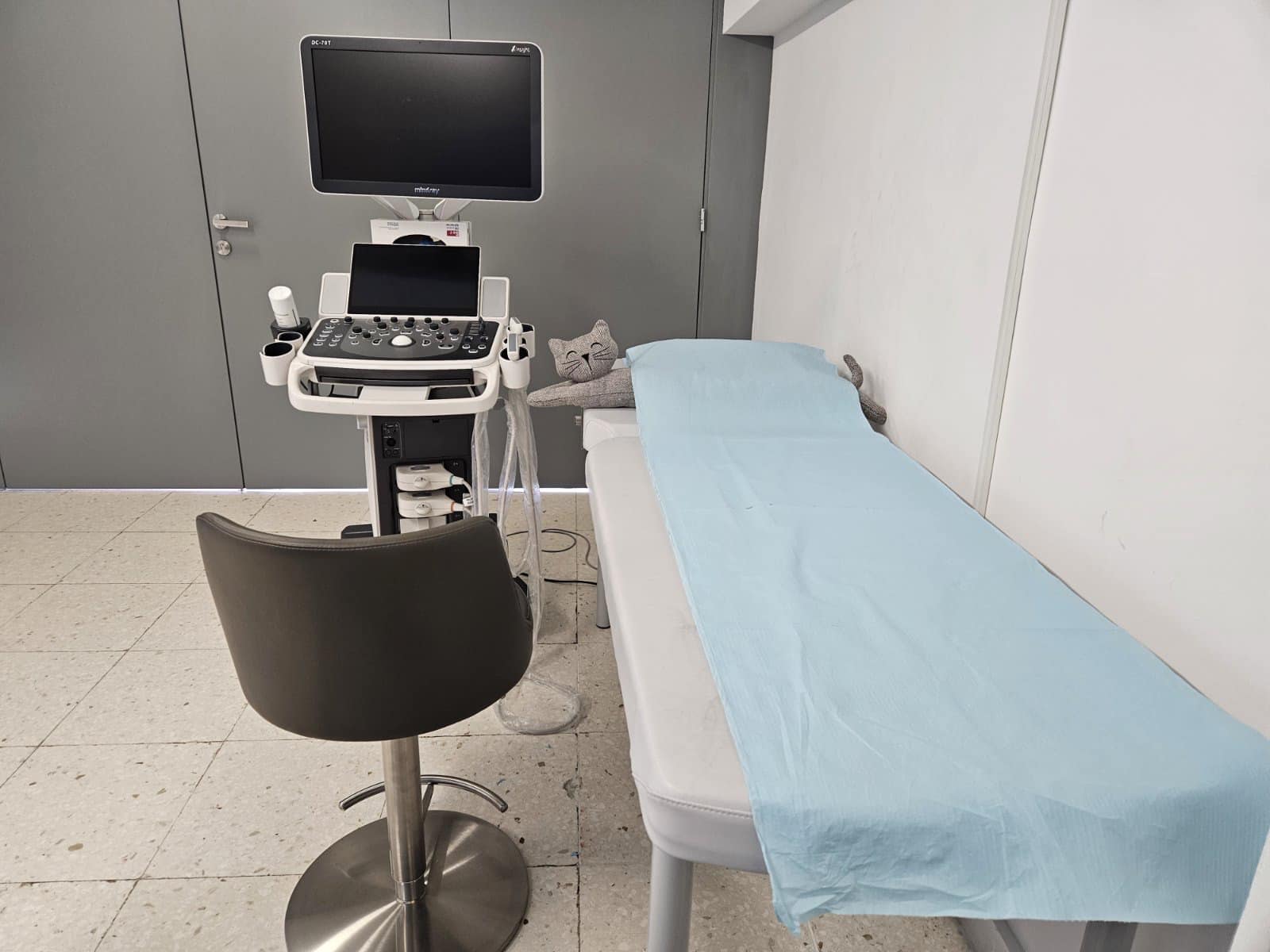
- Ultrasound:
Abdominal Ultrasound, which is performed to check the main organs in the abdomen such as the liver, gallbladder, kidneys, pancreas, spleen, aorta .
Neck Ultrasound, which accurately shows the size and parenchymal composition of the thyroid gland, as well as the composition and size of nodules, when present. In addition, helps in the investigation of parathyroid glands and the status of the lymph nodes.
Education
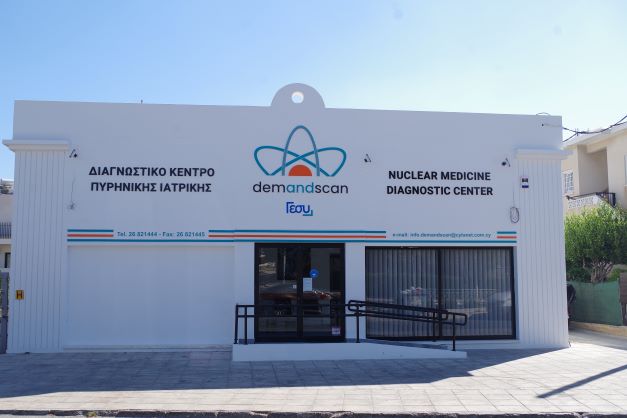
The DEMANDSCAN is a Nuclear Medicine Diagnostic Center in Paphos, that was opened in July 2020. The DEMANDSCAN offers the latest in nuclear medicine technology to diagnose disease earlier and more accurately. A skilled multidisciplinary team of health care professionals, an experienced Nuclear Medicine physician, Cardiologists, Nuclear Medicine Technologists, an external Medical Physicist and other staff uses the appropriate material to help identify abnormalities very early in the progression of disease, allowing for a better prognosis.
Dr. Ourania Demetriadou graduated from Charles University Medical School in Prague and specialised in radiology and nuclear medicine. From 2001 to 2008 she was Head of the Department of Nuclear Medicine at the Nicosia State Hospital and then at the Limassol State Hospital. Dr. Ourania was involved in research projects in collaboration with universities both in Cyprus and abroad, funded by the Research Promotion Foundation and European funds. She is the former president of the Cyprus Society of Nuclear Medicine and former treasurer of the Cyprus Society of Radiology, member of the Biomedical Research Foundation and member of the Cyprus Association of Medical Physicists and Biomedical Engineering and member of the Nuclear Medicine Associations abroad. Dr. Ourania Demetriadou is currently the Scientific Director of the Nuclear Medicine Diagnostic Centre DEMANDSCAN.
The DEMANDSCAN is a Nuclear Medicine Diagnostic Center advises maintaining a safe distance from pregnant women and children for 24 hours after undergoing nuclear medicine procedures.