

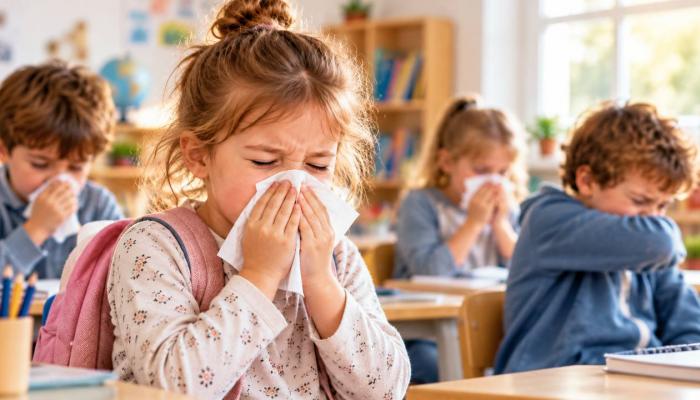
Schools and daycare centers are places where children spend a great deal of time together, interact closely, play, share objects, and stay in the same indoor spaces. As a result, certain infections can spread particularly quickly in these settings. Children tend to get sick more often during the autumn and winter months, when they spend more time indoors and rooms are ventilated less frequently.
Common Colds, Respiratory Viral Infections, and Influenza
These are among the most common infections in children. They are primarily transmitted through respiratory droplets when an infected person coughs, sneezes, or talks. Typical symptoms include a runny nose, sore throat, cough, fever, and weakness. Influenza often begins more suddenly, with a high fever, pronounced weakness, headache, and muscle aches.
COVID-19
Coronavirus infection can also spread in groups of children. In children, the illness is often mild or may resemble an ordinary viral respiratory infection. Possible symptoms include fever, runny nose, cough, sore throat, and weakness. However, the absence of pronounced symptoms does not rule out the possibility of transmitting the infection to others.
Enterovirus Infections
Enteroviruses can spread particularly easily among children. Some of them cause what is known as hand, foot, and mouth disease. Symptoms may include fever, sore throat, small ulcers in the mouth, and a characteristic rash on the palms of the hands, soles of the feet, and sometimes other areas of the body. Infection can occur through contaminated hands, surfaces, objects, and contact with an infected person's bodily secretions.
Rotavirus and Other Gastrointestinal Infections
In childcare settings, infections that cause vomiting, diarrhea, abdominal pain, and fever are also common. Transmission is often associated with contaminated hands, surfaces, water, or food. This is why regular handwashing is particularly important. Gastrointestinal infections can be especially dangerous for young children because of the risk of dehydration.
Chickenpox
Chickenpox is highly contagious and can spread easily in group settings. The main symptom is a characteristic itchy rash that develops through several stages. Fever and weakness may also occur. A child can be contagious even before the characteristic rash appears, which makes it difficult to completely prevent the spread of the infection within a group.
Streptococcal Throat Infection
Some cases of sore throat in children are caused not by viruses but by bacteria, such as group A Streptococcus. Symptoms may include severe sore throat, high fever, pain when swallowing, and swollen lymph nodes. Cough and runny nose are less typical of streptococcal pharyngitis.
If a bacterial infection is suspected, the child should be examined by a doctor. Antibiotics should only be used when a bacterial infection has been confirmed or is reasonably suspected.
Conjunctivitis
Inflammation of the conjunctiva can also spread rapidly among children. Red eyes, excessive tearing, irritation, and discharge from the eyes may be signs of infectious conjunctivitis. It can be caused by either viruses or bacteria.
It is particularly important not to share towels and to avoid touching the eyes with unwashed hands.
How Can the Risk of Infection Be Reduced?
It is impossible to completely eliminate infections in groups of children, but the risk can be reduced. Children should be encouraged to wash their hands regularly with soap, especially before eating and after using the toilet. They should not share bottles, cutlery, towels, or other personal items with other children.
Regularly ventilating indoor spaces and maintaining good surface hygiene are also important. If a child becomes ill, it is better for them to stay home and recover rather than attend school or daycare with a fever, severe cough, vomiting, diarrhea, or other signs of infection.
Another important point is that not every fever or runny nose requires antibiotics. Most respiratory infections in children are viral, so treatment should depend on the cause of the illness. If symptoms are severe, persist, or the child's condition worsens, medical attention should be sought.
A child's health does not begin with trying to “never get sick.” It begins with good hygiene, timely medical care, and a responsible approach to illness.